

Nelson, BC: The Regional District of Central Kootenay (RDCK) is moving forward with regulating the disposal of organic waste for the Industrial, Commercial, and Institutional (IC&I) Sector, with a nine-month implementation window in 2026 to allow ample time for the change.
The regulation will initially target larger food-primary operations such as grocery stores, busy restaurants, and commercial food manufacturers in the communities of Creston, Castlegar, Salmo, and Nelson, where services exist. Commercial, non-residential waste from these communities that arrives at the Creston Landfill, Ootischenia Landfill, Central Transfer Station, and Grohman Narrows Transfer Station will eventually be required to separate compostable organic waste from landfilled waste.
“Our Board wants to encourage organic waste diversion by supporting the private sector with rebates and reduced tipping fees, so in combination with that, we recognize that regulation is the most effective tool the Regional District has at getting the levels of participation needed to meet our waste diversion goals,” said Aimee Watson, RDCK Board Chair.
It is estimated that up to 3,900 tonnes of compostable organic waste can be kept out of our regional landfills annually if the IC&I sector fully participates in organics diversion. The IC&I sector is responsible for an estimated 45% of landfilled waste in our region. Of this material, 35% is estimated to be compostable organics, making it the RDCK’s largest single-stream waste diversion potential.
Whenever possible, food and beverage related operations in the affected communities will be contacted by email and direct mail, with additional advertisements in the local newspapers and on social media throughout 2026 to build awareness of these changes. Information events held in conjunction with stakeholder groups will be held in the early spring and summer.

The new regulation was included in the Resource Recovery Facilities Regulatory Bylaw update for 2026, as approved by the RDCK Board of Directors. Definitions were added to the Bylaw to include compostable organic waste originating from Industrial, Commercial, and Institutional sources as a type of “Recyclable Material”.
Recyclable Materials are items that can be easily separated from mixed waste (garbage) and diverted to cost-effective recycling solutions. As per the Bylaw, when more than 10% of a load contains recyclable materials and is landfilled, the entire load is subject to a variable tipping fee set at double the price of mixed waste ($354.50/tonne). This currently occurs with items like corrugated cardboard and has been an effective tool for keeping this material out of our landfills.
A subsidized tipping fee of $55/tonne for separated organic waste originating from the IC&I sector is being maintained in 2026. This makes commercial organic waste disposal significantly less expensive than mixed waste, which is currently charged at $177.25/tonne.
Affected businesses and institutions will have the majority of 2026 to make the necessary changes to their operations. By September 2026, the RDCK will begin issuing warnings before applying the variable tipping fee if loads contain more than 10% organic waste. Selective enforcement may begin earlier targeting larger potential generators, such as grocery stores.
Keeping organic waste out of our region’s landfills is a strategic priority of the RDCK and a key part of the Resource Recovery Plan. RDCK landfills have finite lifespans, and this material takes up much needed space. When landfilled, organic waste releases large amounts of methane as it rots without oxygen, making it a source of potent greenhouse gases that significantly contribute to Canada’s emissions.
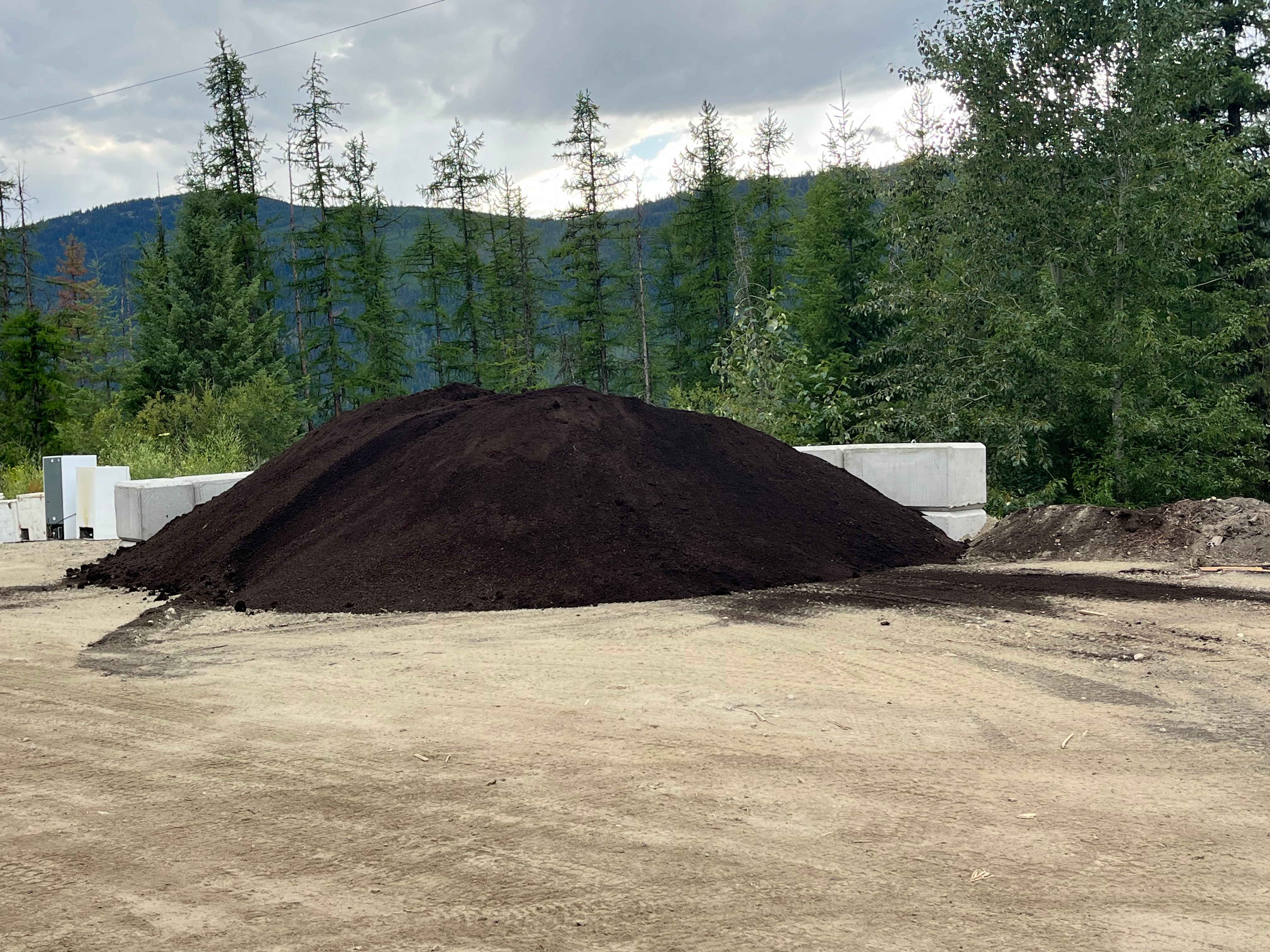
Now that the RDCK has commercial composting facilities to process organic waste and turn it into compost – a valuable soil amendment, implementing regulation that encourages the largest generators of organic waste in the IC&I sector to participate makes a lot more sense than putting it in our landfills.
“We have built the infrastructure to accept and process organic waste separately from garbage, noting that organic waste doesn’t belong in the landfill,” said Watson. “We are making good quality compost from it, which helps with food production, the circular economy, and most importantly, composting organics into soil is an incredible carbon capture tool. Further, reducing the volume of our landfills enables sustainable operations for future generations while reducing methane emissions that contribute to climate change. The board is keen to support this shift through incentives with the regulations to support improved resource recovery for all residents.”
To further support the IC&I sector in making changes to their waste management systems, the RDCK is offering a limited number of $400 rebates for businesses for the purchase of materials and supplies related to organics recycling. Rebates are available to businesses in and around Castlegar, Creston, Nelson, and Salmo, and will be issued on a first come, first served basis. Additionally, waste separation signage and other resources are available for free online to download and print.
Resource Recovery Staff are available to provide implementation guidance, process rebates, and answer questions. Impacted operations are encouraged to be in touch via the RDCK’s engagement platform: engage.rdck.ca; or contact the Organics Team directly: organics@rdck.ca.