

Water Services

Environmental Services
Water Services


Contact Information
24 Hour – Water Emergency
(Balfour, Burton, Duhamel Creek, Edgewood, Fauquier, Grandview Properties, Lucas Road, Rosebery Highlands, South Slocan, West Robson, Woodbury Village, Woodland Heights, Ymir)
250.352.1504
Line breaks, major leaks and water outages.
24 Hour – Water Emergency
(Erickson, Lister, Riondel, Sanca Park)
250.254.1685
Line breaks, major leaks and water outages.
RDCK Water Services Mission Statement
RDCK Water Services is committed to delivering safe, reliable water services to communities across the region.
We currently own and operate 18 independent water systems and one drainage system, ensuring high-quality drinking water and regulatory compliance through water quality monitoring, treatment, distribution system maintenance, water conservation and emergency response planning.
Each system is managed as a self-sustaining service, funded entirely by its users, with the exception of any federal or provincial grant funding.
Our team oversees system operations, maintenance, and capital upgrades, long-term sustainable asset management and financial planning, conservation initiatives and regulatory compliance.
We are dedicated to protecting local water sources and providing responsive customer service to residents and businesses.

EyeOnWater® Portal and Leak Notification Guidance
Received a Leak Notification?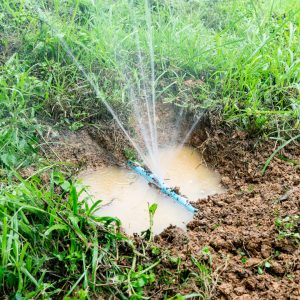
As a courtesy, the RDCK monitors meter data and may notify customers when their water meter registers continuous flow over an extended period. These notifications are intended to alert property owners to potential leaks or unintended water use.
The responsibility for investigating and resolving potential leaks on private property rests with the property owner.
For properties billed on a flat-rate basis rather than water consumption, a leak notification does not have any direct financial impact on your water bill. However, unexplained continuous flow may indicate a leak that could worsen over time and result in property damage or unnecessary water loss.
Step 1: Sign Up for EyeOnWater®
The first step in any leak investigation is to register for EyeOnWater®, which provides access to your meter data online.
EyeOnWater® is a free online service that allows metered customers to review their water consumption, identify unusual usage patterns and set up leak alerts.
To register, visit https://EyeOnWater.ca. You will need your five-digit metered account number beginning with “6” and the postal code associated with your water account.
EyeOnWater® allows you to view water usage data (updated twice daily), monitor consumption in 15-minute intervals, track changes after isolating sections of your plumbing, and monitor water use over time. This information can help identify continuous water use and determine whether troubleshooting efforts have resolved a potential leak.
Step 2: Check for Common Sources of Leakage
Before assuming the problem is with the meter, perform a thorough inspection of your property
-
- Outdoor plumbing: Walk your property and check hose connections, frost-free hydrants, irrigation systems and underground water lines. Look for signs of wet ground or unusually green vegetation. The Kootenay region can have very sandy or gravelly soil and small leaks may not be visible as water infiltrates easily.
-
- Indoor plumbing: Inspect taps, fixtures, water heaters, water softeners, filtration equipment, crawl spaces and basements.
-
- Toilets: Listen for running water and check for leaking flappers. A few drops of food colouring in the toilet tank can help identify leaks if colour appears in the bowl without flushing.
-
- Agricultural water use: Inspect livestock waterers, float valves, irrigation controls and water lines supplying fields or outbuildings.
-
- Unused plumbing: Check for old or abandoned water lines that may still be connected to the water supply.
Step 3: Isolate Sections of Your Private Plumbing
The most effective way to investigate continuous flow is to systematically isolate portions of your private distribution system.
1. Close a shutoff-valve serving a building, irrigation system, or other section of piping.
2. Record the exact date and time.
3. Leave the valve closed for at least one hour (provided doing so is safe and will not affect essential water needs)
4. After EyeOnWater® updates, review the corresponding time period.
5. Determine whether water continued to flow through the meter during the isolation period.
If flow stops, the leak is likely within the isolated section. If flow continues, reopen the valve and test another section.
Common Misconceptions
The meter must be faulty: All installed meters are new, factory-tested devices that undergo quality control testing before deployment.
The meter connection is leaking: All meters received a quality control post installation inspection and were determined not to be leaking.
My meter is swapped with my neighbour’s: Meter installations are documented and verified during installation.
Why EyeOnWater® is Important
The ability to view usage in 15-minute increments helps identify hidden leaks, irrigation system issues, running toilets, faulty water treatment equipment, and other unintended water use. The data helps property owners verify the effectiveness of isolation testing and narrow down potential leak locations.
Need Further Assistance?
If you have reviewed your EyeOnWater® data and completed isolation testing but are still unable to identify the source of continuous flow, consider contacting a licenced plumber, irrigation system specialist or leak detection specialist.
Complete List of Water Conservation Measures for All Stages
View List
Water Notifications Service
Sign up here: RDCK Water Notification Service
The RDCK uses a notifications service powered by Voyent Alert. Users will receive both Emergency and RDCK Water System notifications based on the location entered when signing up. The service offers users a choice of how to receive notification: mobile app, email, SMS text message, or text to landline voice call. Voyent Alert is FREE, easy to use, 100% Canadian, and totally anonymous.
RDCK water system customers will receive water system related notifications that include: water quality advisories, maintenance activities, water conservation measures, and other public notices. Once registered, users will automatically be subscribed to receive notifications sent out by Emergency Services, as well as RDCK water system specific notifications, Users are able to customize which notifications they would like to receive within the “My Topics” tab, and can subscribe to receive notifications for multiple locations throughout the RDCK.
If you need assistance in signing up, contact the RDCK Water Services Office at 250.428.2612 or 1.833.233.2662.
Current Water Advisories / Conservation Measures / Maintenance Notices
Click HERE to see Boil Water Notices, Water Quality Advisories, Water Conservation Measures, and Maintenance Notices currently on RDCK water systems.
Water, Water, Everywhere….
The Regional District currently owns and operates 18 water systems. Locations can be seen on the RDCK Water Systems map.
For more information on RDCK water systems please visit the RDCK Water Systems webpage.
For information on water systems not owned/operated by the RDCK, visit the Interior Health Interactive Drinking Water Advisory Map to search the entire Interior Health region for current drinking water advisories. You can also learn about water suppliers, types of advisories and the reasons for the advisories.
Capital Projects
Current RDCK Water System Capital Projects
| System | Description | Status |
|---|---|---|
| Balfour | Secondary water source | 50% complete |
| Erickson | Phase 1 Metering | 25% complete |
| Erickson | Creston Valley Alternate Water Supply Feasibility Study | 40% complete |
| ALL | SCADA system upgrades | 50% complete |

Completed RDCK Water System Projects
| System | Description | Completed |
|---|---|---|
| Duhamel | Distribution upgrades | September 2024 |
| Erickson | UV replacement | October 2024 |
| Lister | Water line replacement and distribution upgrades | November 2024 |
| Riondel | Reservoir valve chamber repair and meter install | December 2024 |
| Woodbury | Water treatment system upgrades | October 2024 |
| Ymir | Control and SCADA upgrades | November 2024 |
| Grandview Properties | Meter Interface Unit upgrade | October 2021 |
| Woodland Heights | Disinfection treatment system and building upgrades | September 2020 |
| Erickson | Water distribution system replacement along Tooze Road | July 2020 |
| Edgewood | New well sources, reservoir, pump station, and water transmission line | December 2019 |
| Balfour | Universal metering, new reservoir, Busk Road mainline replacement, new booster pumps, and PLC controls at treatment plant | July 2019 |
Water Bylaws
The terms and conditions under which water from the Regional District of Central Kootenay Water Systems may be supplied, used and regulated can be seen in Water Bylaw No. 3078. The utility rates, fees, and charges for the Regional District of Central Kootenay owned utilities can be seen in Utilities Rates, Fees and Charges Bylaw No. 3077.
Billing and Account Changes
Please visit the Utility Services webpage to find information on utility billing services, and how to request a new account or report a change to an existing account.
Why are changes being made to my water system?
Many of BC’s water systems are in need of infrastructure upgrades and/or replacement. The changes planned for many RDCK water systems are intended to correct the problems that are related to age and years of use. For specific project information, see Water Systems.
Why are there sometimes contaminants in my drinking water?
Many water systems in BC draw their drinking water straight from surface sources. Many micro-biological contaminants occur naturally and are part of a functioning ecosystem. Other contaminants are the result of metals leaching from the ground or from the introduction of fecal matter from livestock or wildlife.
Who is most at risk from drinking water contamination?
Everyone is at risk from water contamination. However, the very young, the very old, and people with suppressed immune systems are most at risk of becoming ill.
What are the benefits and drawbacks of using chlorine to treat my drinking water?
When using chlorine as the sole treatment method, high doses of chlorine are required for extended periods of contact time. The amount of chlorine required and the time required depends on the temperature and chemistry of the water. If organics are present in the source water and chlorine is used as a treatment method, the chlorine can react with the organics and produce byproducts that create odour and taste problems.
Modern drinking water treatment processes, like those used at many RDCK facilities, use filtration to remove the organics and micro-organisms followed by ultra violet light to kill any harmful micro-organisms that may have passed through the filtration process. Once all the organics have been removed from the water, a very small amount of chlorine is added to maintain the quality of the water as it travels through pipes to your tap. Chlorine in this concentration does not produce odour problems, taste problems or, without any organics for the chlorine to react with, harmful byproducts.
For more information on the benefits and drawbacks of chlorine, please see Health Canada’s website on drinking water chlorination.
How can I remove chlorine from my drinking water?
Chlorine can be easily removed from drinking water using a simple carbon filter (e.g. Brita filters) or by letting water stand overnight in a clean, covered jug.
Can I acquire immunity to the micro-organisms in drinking water?
Immunity is not possible. However, the symptoms of gastro-intestinal illness (e.g. stomach cramps, bloating, gas, diarrhea, etc.) may be reduced with long-term exposure. This desensitization does not fully protect the individual from large and sudden doses of contaminants.
Why is my water system on a Boil Water Notice?
Interior Health issues a Boil Water Notice when a water system’s test results indicate the presence of certain micro-organisms (i.e., coliforms) or pathogens (i.e., E. coli). Boil Water Notices will also be issued as a precautionary measure when work is being completed that depressurizes the water main, which creates a potential pathway for contaminants to enter the water system.
When can I expect the Boil Water Notice on my water system to be lifted?
Only Interior Health can lift or issue a Boil Water Notice. In general, a water system will have to produce two consecutive water samples that show zero micro-organisms.
Can my system become an RDCK-owned water system?
Any water or wastewater system located within the boundaries of the RDCK can submit an Expression of Interest to become a RDCK service. You can learn more about the Acquisition Process here.
Contact Information
Water Inquiries:
Mon-Fri
8:30 am – 4:30 pm
250.352.8161 or 1.800.268.7325
Utility Billing Inquiries:
Mon-Fri
8:30 am – 1:00 pm
250.428.2612 or 1.833.223.2662